
International Day of Older People 2026: What’s on Your Doorstep – and Who Is There to Share It With?
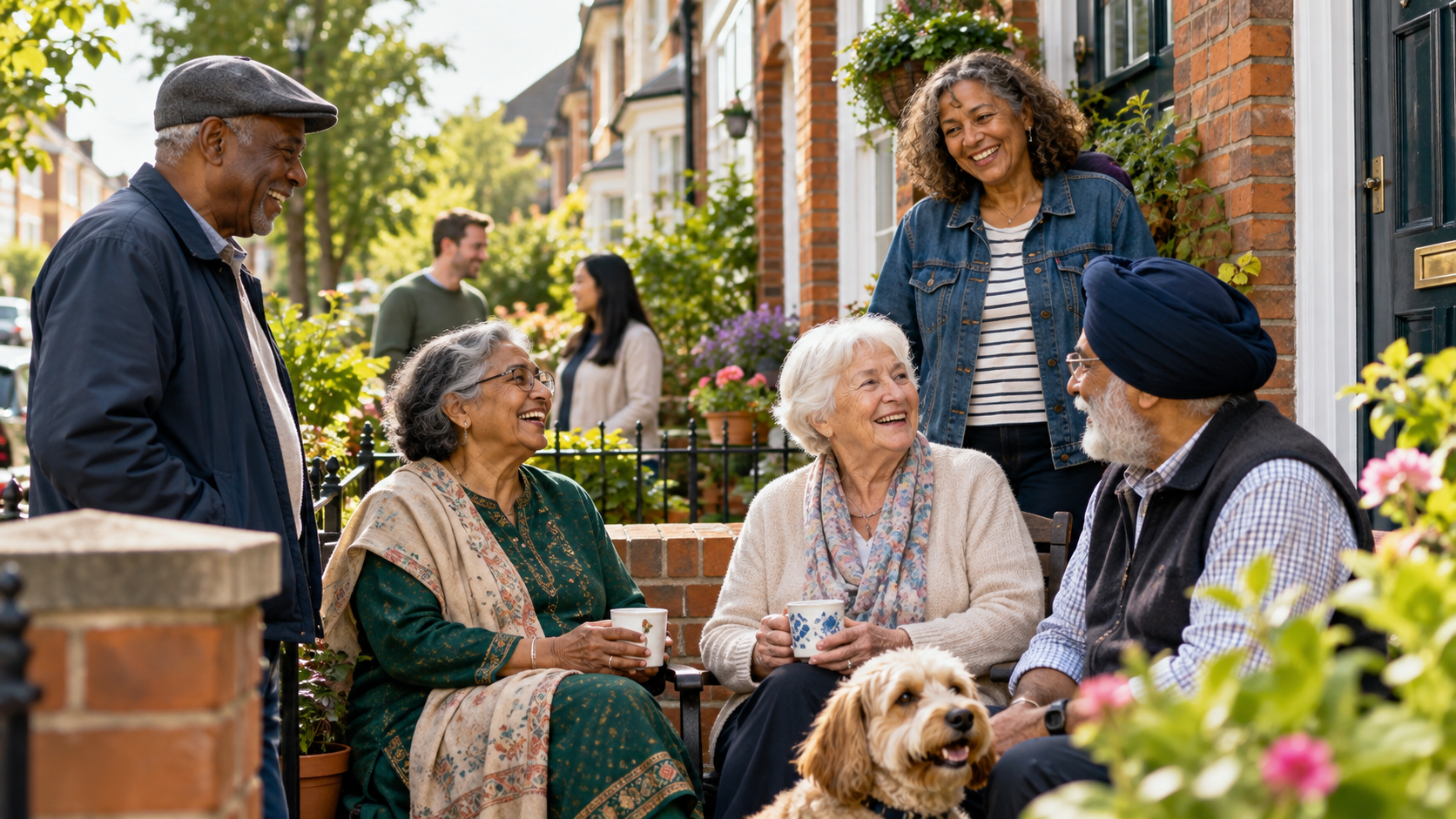
Supportmatch image inspired by the 2026 “What’s on your doorstep?” theme.
International Day of Older People 2026: What’s on Your Doorstep – and Who Is There to Share It With?
Supportmatch Homeshare | International Day of Older People – 1 October 2026
This year, the Centre for Ageing Better is asking a simple but powerful question: “What’s on your doorstep?” The campaign celebrates the people, places and services that help us stay active and connected, while highlighting the barriers that can make them harder to reach.
On 1 October 2026, International Day of Older People gives us an opportunity to recognise the contribution older people make to our communities and to consider what helps all of us live well as we age.
A local park, library, GP surgery, café, community centre or social group can all contribute to making somewhere a good place to grow older. But having services nearby does not necessarily mean they are accessible.
The Centre for Ageing Better highlights how factors such as not driving, unsafe or uneven pavements, difficulty finding out what is happening locally, or being unable to leave home can make a person’s world feel much smaller. For some people, support, services and connections need to come right to the front door.
Sometimes connection begins at home
At Supportmatch, the campaign particularly resonates with us because there is another important part of the conversation: who is on the other side of the doorstep?
Growing older independently is about much more than having the right services available. For many people, what matters just as much is having someone to talk to, someone who notices if something is not quite right, someone to share a cup of tea with, or simply the reassurance of another person being around.
An older person may live in a community with excellent facilities and still experience loneliness. They may stop driving, lose a partner, have relatives living far away, find public transport limited, or become less confident about going out and joining activities they once enjoyed.
Older people are also active contributors to their communities – as workers, volunteers, carers, neighbours, friends and family members. Keeping people connected therefore matters not only to individuals, but to the strength of communities themselves.
Could Homeshare bring connection through the front door?
Homeshare is one practical way of helping some people remain independent and connected in their own homes.
Through Supportmatch, an older Householder with a spare room is carefully matched with a vetted Homesharer who is looking for affordable accommodation. In return for their home, the Homesharer provides an agreed amount of companionship, practical help and reassuring overnight presence.
This might involve sharing an evening meal, helping with shopping, preparing simple meals, assisting with technology, accompanying someone on an outing, or simply spending time together.
Homeshare is not personal care and does not replace professional health or social-care services. Instead, it can sit alongside those services as part of the wider network of community-based support that helps someone continue living independently.
The relationship works both ways. Homesharers may be professionals, students, key workers, people relocating for work or others looking for affordable accommodation. They gain a home and, at the same time, become part of a household and often part of the wider local community.
What is on the doorstep in rural communities?
The question becomes particularly important in rural areas. A service may technically exist within a district, but if someone lives several miles away, does not drive and has limited public transport, how accessible is it in reality?
Supportmatch sees this challenge when trying to establish Homeshare arrangements in rural and smaller communities. There may be older people who would welcome companionship and practical support, and there may also be people locally struggling to find affordable accommodation. The challenge is connecting them.
That is why local councils, NHS organisations, Adult Social Care teams, community groups, housing organisations, voluntary organisations and local information networks can all play an important part. Earlier awareness of options such as Homeshare can help families explore preventative solutions before isolation or practical difficulties become much more serious.
Knowing what exists matters too
People cannot access opportunities if they do not know they exist. Not everyone is online, and local newspapers, community directories, libraries, noticeboards, GP surgeries, social workers, voluntary organisations and word of mouth remain important ways of reaching people.
This is particularly relevant to Homeshare. Very often, a Householder or family discovers the model only when they have reached a difficult point and begin searching for alternatives. We would like to see Homeshare become a more routinely understood option – something families, professionals and communities know about before a crisis develops.
A doorstep should lead to a community
International Day of Older People is an opportunity to celebrate older people rather than simply talk about the challenges associated with ageing.
Creating age-friendly communities means making sure people can continue participating in those communities for as long as possible. Sometimes that means better pavements. Sometimes it means accessible transport. Sometimes it means a community group, library or local service. And sometimes it means bringing connection right through the front door.
This International Day of Older People, perhaps we should all ask:“What is on the doorstep of older people in our communities?”And also:“Who might be missing from it?”<br><br><br><br><br><br>
About Supportmatch Homeshare
Supportmatch Homeshare brings together older people and others who would benefit from companionship and practical support at home with carefully assessed Homesharers seeking affordable accommodation. Homeshare is a non-care arrangement based on mutual benefit, safeguarding, compatibility and clearly agreed boundaries.
Find out more: www.supportmatch.co.uk
Reference and inspiration
Centre for Ageing Better, International Day of Older People 2026: “What’s on your doorstep?”. The campaign highlights how local people, places and services can support connection and independence, while recognising barriers that may restrict access.

